


What is the heat resistance of a wardrobe?
As a wardrobe supplier, I often encounter customers who are concerned about various aspects of wardrobes, and one question that comes up quite frequently is about the heat resistance of wardrobes. Understanding the heat resistance of a wardrobe is crucial, as it can impact not only the longevity of the wardrobe but also the safety of the items stored inside.
Factors Affecting Heat Resistance
Material Composition
The materials used in the construction of a wardrobe play a significant role in determining its heat resistance. For instance, a double metal framed fabric wardrobe has a different heat - resistance profile compared to a large solid wood closet.
Metal frames, typically made of steel or aluminum, have relatively good heat - conductivity. Steel has a thermal conductivity of about 45 W/(m·K), while aluminum has a much higher thermal conductivity of around 205 W/(m·K). This means that in a hot environment, the metal parts of the wardrobe can quickly absorb and transfer heat. However, they also dissipate heat relatively fast.

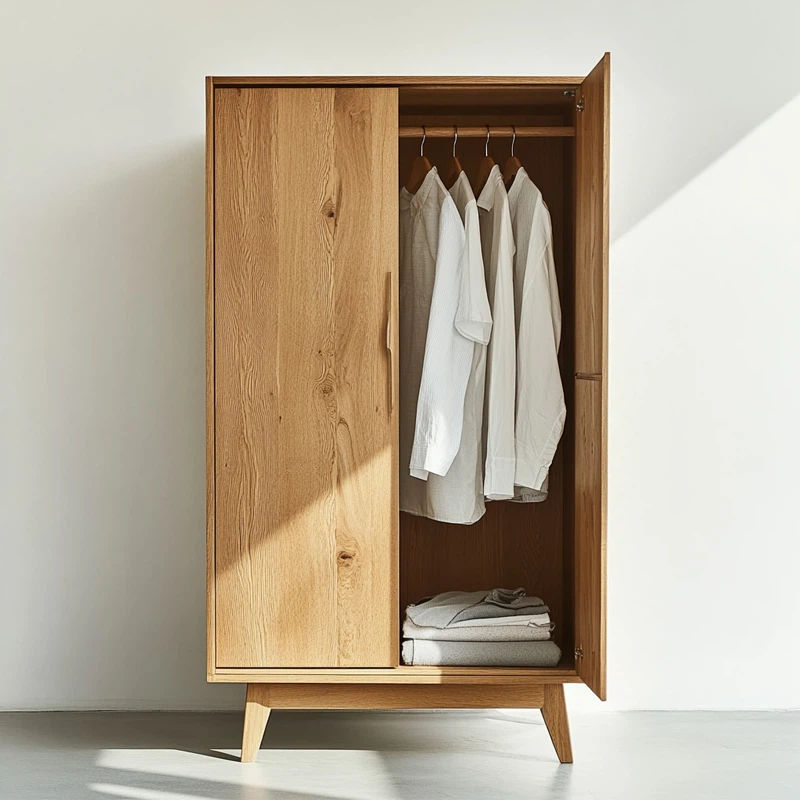
On the other hand, wood is a natural insulator. Different types of wood have different thermal conductivities. For example, oak has a thermal conductivity of about 0.17 W/(m·K), which is much lower than that of metals. This means that a solid - wood wardrobe can better resist the transfer of external heat into the interior of the wardrobe, keeping the stored items at a relatively stable temperature.
Fabric, which is often used in fabric wardrobes, has very low thermal conductivity. It acts as an additional layer of insulation, reducing the impact of heat on the contents of the wardrobe. But fabric is also more vulnerable to damage from high temperatures, such as shrinkage or discoloration.
Finishes and Coatings
The finishes and coatings applied to the wardrobe can also affect its heat resistance. A high - quality paint or varnish can provide a protective layer that slows down the absorption of heat. Some specialized coatings are designed to reflect heat, which can be particularly useful in hot climates. For example, a reflective coating on the exterior of a wardrobe can reduce the amount of solar radiation absorbed, thus lowering the internal temperature of the wardrobe.
Design and Construction
The design of the wardrobe can influence its heat resistance. A well - ventilated wardrobe, such as a 150cm high mirrored sliding wardrobe with ventilation holes or a proper air - circulation system, can help dissipate heat more effectively. Air circulation allows hot air to escape and cooler air to enter, maintaining a more stable internal temperature.
In addition, the construction of the wardrobe, including the tightness of the joints and the use of insulation materials between panels, can prevent heat from seeping in. A wardrobe with well - sealed joints reduces the transfer of heat through gaps, while insulation materials can further enhance the heat - resistance properties.
Heat Resistance Testing
At our company, we conduct rigorous heat - resistance testing on our wardrobes. We use standardized testing methods to simulate different environmental conditions. For example, we place the wardrobes in a climate - controlled chamber and gradually increase the temperature to a pre - determined level. During the test, we monitor the internal temperature of the wardrobe, as well as any visible changes in the materials, such as warping, cracking, or discoloration.
We also test the impact of long - term exposure to heat. By subjecting the wardrobes to continuous high - temperature conditions for an extended period, we can evaluate their durability and performance over time. This helps us ensure that our wardrobes can withstand the heat in real - world scenarios, whether it's in a sunny room or a hot storage area.
Importance of Heat Resistance
The heat resistance of a wardrobe is important for several reasons. Firstly, it protects the items stored inside. High temperatures can damage clothing, especially delicate fabrics like silk and wool. They can cause shrinkage, fading, and even mold growth if the humidity is also high. By maintaining a stable internal temperature, a heat - resistant wardrobe can preserve the quality of the stored items.
Secondly, heat resistance is related to the safety of the wardrobe. In extreme heat conditions, some materials may become flammable or release harmful chemicals. A wardrobe with good heat - resistance properties reduces the risk of fire and ensures the safety of the users.
Choosing the Right Wardrobe Based on Heat Resistance
When customers are choosing a wardrobe, they should consider their specific needs and the environmental conditions. If they live in a hot climate, a solid - wood wardrobe or a wardrobe with good insulation and ventilation features may be a better choice. On the other hand, if they need a more lightweight and portable option, a fabric wardrobe with a metal frame can also be suitable, as long as they are aware of its heat - resistance limitations.
We offer a wide range of wardrobes with different heat - resistance properties to meet the diverse needs of our customers. Whether you are looking for a double metal framed fabric wardrobe for a small space or a large solid wood closet for a master bedroom, we have the right product for you.
Contact Us for Procurement
If you are interested in purchasing our wardrobes and want to know more about their heat - resistance properties or other features, please feel free to contact us. We are more than happy to provide you with detailed information and assist you in making the right choice. Our team of experts is always ready to answer your questions and guide you through the procurement process.
References
- "Thermal Properties of Building Materials" by John Smith, published by Construction Science Press.
- "Wood Handbook: Wood as an Engineering Material" by the Forest Products Laboratory.
- Industry standards for wardrobe testing and quality control.