


What are the different types of dog crates?
As a dog crate supplier, I've had the privilege of exploring the diverse world of dog crates. Each type serves a unique purpose, catering to different dog breeds, lifestyles, and owner preferences. In this blog, I'll delve into the various types of dog crates available in the market, highlighting their features, benefits, and ideal use cases.
Wire Dog Crates
Wire dog crates are one of the most popular types on the market. They are typically made of metal wire, providing a sturdy and durable enclosure for your furry friend. The open design allows for maximum ventilation, keeping your dog cool and comfortable, especially in warmer climates. Wire crates also offer excellent visibility, allowing your dog to see their surroundings and feel less confined.
One of the key advantages of wire dog crates is their portability. They are lightweight and easy to assemble and disassemble, making them ideal for travel or temporary use. Many wire crates come with a removable tray at the bottom, which makes cleaning up after your dog a breeze. Additionally, wire crates often feature a double-door design, providing easy access to your dog from both the front and side.
However, wire dog crates may not be suitable for all dogs. Some dogs may chew on the wires, which can pose a safety hazard. If you have a dog that is prone to chewing, you may want to consider a different type of crate or use a crate cover to prevent access to the wires.
Plastic Dog Crates
Plastic dog crates, also known as airline crates, are another popular option. They are typically made of hard plastic and feature a solid, enclosed design. Plastic crates provide a more secure and cozy environment for your dog, similar to a den. They are also more soundproof than wire crates, which can be beneficial if you have a noisy dog or live in a busy area.
One of the main advantages of plastic dog crates is their durability. They are resistant to chewing and scratching, making them a great choice for dogs that are prone to destructive behavior. Plastic crates are also easy to clean and maintain, as they can be wiped down with a damp cloth. Additionally, many plastic crates come with a removable divider, which allows you to adjust the size of the crate as your dog grows.
However, plastic dog crates may not be as well-ventilated as wire crates. They can also be heavier and more difficult to transport, especially if you need to travel long distances. If you choose a plastic crate, make sure it has adequate ventilation holes to ensure your dog stays cool and comfortable.
Soft-Sided Dog Crates
Soft-sided dog crates are a lightweight and portable option. They are typically made of fabric and feature a collapsible design. Soft-sided crates are easy to carry and store, making them ideal for travel or short-term use. They also provide a more comfortable and cozy environment for your dog, as they are lined with soft material.
One of the main advantages of soft-sided dog crates is their flexibility. They can be easily folded up and stored in a small space when not in use. Soft-sided crates are also relatively inexpensive compared to wire and plastic crates. Additionally, many soft-sided crates come with a carrying handle and wheels, making them easy to transport.
However, soft-sided dog crates may not be as durable as wire or plastic crates. They are more prone to tearing and chewing, especially if you have a large or active dog. If you choose a soft-sided crate, make sure it is made of high-quality material and has reinforced seams to prevent damage.
Heavy-Duty Dog Crates
Heavy-duty dog crates are designed for large and powerful dogs. They are typically made of thick metal or heavy-duty plastic and feature a reinforced structure. Heavy-duty crates provide a secure and sturdy enclosure for your dog, preventing them from escaping or causing damage to the crate.
One of the main advantages of heavy-duty dog crates is their strength. They are built to withstand the weight and strength of large dogs, making them a great choice for breeds such as Great Danes, Mastiffs, and Rottweilers. Heavy-duty crates are also more resistant to chewing and scratching, ensuring they last for a long time.

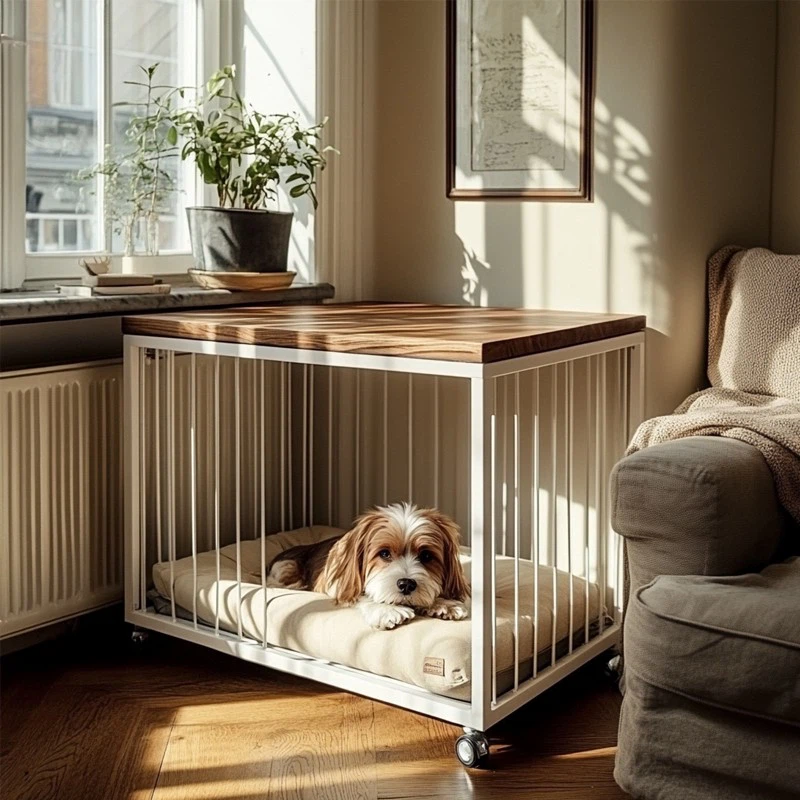
However, heavy-duty dog crates are usually heavier and more expensive than other types of crates. They may also be more difficult to transport and store, especially if you have limited space. If you choose a heavy-duty crate, make sure it is large enough to accommodate your dog comfortably and has adequate ventilation.
Indoor Dog Crates
Indoor dog crates are designed for use inside your home. They come in a variety of styles and sizes, allowing you to choose the one that best fits your decor and your dog's needs. Indoor crates can be made of wire, plastic, or soft material, depending on your preferences.
One of the main advantages of indoor dog crates is their convenience. They provide a safe and comfortable space for your dog to rest and relax while you are at home. Indoor crates can also help with house training, as they can be used to confine your dog when you are unable to supervise them. Additionally, many indoor crates come with a removable tray or liner, making cleaning up after your dog easy.
When choosing an indoor dog crate, consider the size of your dog and the amount of space you have available. Make sure the crate is large enough for your dog to stand up, turn around, and lie down comfortably. You may also want to choose a crate that matches the style of your home decor.
Outdoor Dog Crates
Outdoor dog crates are designed for use outside your home. They are typically made of heavy-duty materials such as metal or plastic and are built to withstand the elements. Outdoor crates provide a secure and sheltered space for your dog to stay when you are away from home or when you want to give them some fresh air.
One of the main advantages of outdoor dog crates is their durability. They are designed to withstand rain, snow, and extreme temperatures, ensuring your dog stays safe and comfortable. Outdoor crates also provide a safe and secure area for your dog to play and exercise, preventing them from wandering off or getting into trouble.
However, outdoor dog crates require more maintenance than indoor crates. They need to be cleaned regularly to prevent the buildup of dirt and debris. Additionally, you may need to provide your dog with a shelter or cover to protect them from the sun and rain.
Choosing the Right Dog Crate
When choosing a dog crate, there are several factors to consider. First, consider the size of your dog. The crate should be large enough for your dog to stand up, turn around, and lie down comfortably. You may also want to choose a crate that has a removable divider, which allows you to adjust the size of the crate as your dog grows.
Second, consider the type of dog you have. If you have a large or powerful dog, you may need a heavy-duty crate. If you have a small or medium-sized dog, a wire, plastic, or soft-sided crate may be sufficient. Additionally, if you have a dog that is prone to chewing or scratching, you may want to choose a crate that is made of durable material.
Third, consider your lifestyle and needs. If you travel frequently, a portable crate such as a soft-sided or wire crate may be ideal. If you have limited space in your home, an indoor crate that can be easily stored when not in use may be a better choice. Additionally, if you have a dog that spends a lot of time outside, an outdoor crate may be necessary.
Finally, consider your budget. Dog crates come in a variety of prices, ranging from inexpensive to high-end. Choose a crate that fits your budget while still providing a safe and comfortable environment for your dog.
Conclusion
In conclusion, there are several different types of dog crates available in the market, each with its own unique features and benefits. When choosing a dog crate, it's important to consider the size of your dog, the type of dog you have, your lifestyle and needs, and your budget. By choosing the right crate, you can provide your dog with a safe and comfortable space to rest and relax.
If you're in the market for a dog crate, I encourage you to explore our wide range of options. We offer a variety of wire, plastic, soft-sided, and heavy-duty crates to suit every dog and owner. Whether you need an indoor crate, an outdoor crate, or a crate for travel, we have the perfect solution for you.
For extra large dog cages inside home, you can visit our website extra large dog cages inside home.
If you have any questions or need assistance choosing the right dog crate, please don't hesitate to contact us. We're here to help you find the perfect crate for your furry friend.
References
- American Kennel Club. (n.d.). Choosing the Right Crate for Your Dog. Retrieved from https://www.akc.org/expert-advice/training/choosing-the-right-crate-for-your-dog/
- PetMD. (n.d.). Types of Dog Crates. Retrieved from https://www.petmd.com/dog/care/types-dog-crates
- The Spruce Pets. (n.d.). How to Choose the Best Dog Crate. Retrieved from https://www.thesprucepets.com/how-to-choose-the-best-dog-crate-1117927